The whole game in one line
Understand who your customers already are. Understand who potential customers are. That's it.
Do those two things at depth and you'll make a lot of money. Skip them and you'll guess your way into mediocrity, even with a great product, even with great ads, even with a great offer. Research is the input. Everything downstream — concept selection, ad copy, advertorials, image direction, offers, even pricing — gets dramatically better when the input is real.
This sub-page is the full research stack. The post-purchase survey that's the master artifact (with the 11 questions I run, the extraction notes for each, and the clustering framework). The Bloom case study that shows why this matters. My own posture-corrector → women's sports bra story (one of the best lessons I've ever learned, including the part where it cost me $50k). The emotional valence layer most operators skip. And the multi-source research stack: Reddit, Facebook groups, your own community, comments scraping, AI voice agents.
By the end, you should be able to set up a real research pipeline that feeds every other module in this case study with the kind of avatar input that makes ads land.
Two questions, first principles
Strip everything down. The two questions you're actually answering with research:
- Who are my customers already? Based on data I have — orders, emails, comments, support tickets, reviews.
- Who are potential customers? Based on adjacent desire signals — people asking for things you don't sell yet, segments visible in your data but underserved, communities your avatar lives in that you haven't entered.
Most operators only ever look at #1. They survey existing buyers, optimize for them, and miss the larger expansion path that #2 reveals.
The brands that scale to nine figures live in #2.
Bloom — the origin story masterclass
Bloom Nutrition is a nine-figure energy drink brand for women. But energy drinks weren't their first product. This is the full arc, because every stage is a research lesson.
Stage 1 — Founder is the avatar. The founder herself was the customer. She'd been overweight, gone through a serious dieting/fitness journey, and ended up with a transformation. The avatar started as just a more refined version of her own past.
Stage 2 — Identify the larger pool. She started posting content about the journey. The followers were the proof: there were a lot of women just like her. She wasn't building a product yet — she was building attention. All marketing is converting attention. She had attention but no monetary conversion.
Stage 3 — First product: $15 digital book. Her partner (already an entrepreneur) saw the attention and built the simplest possible monetary conversion: an info product detailing exactly what she did. $15 for a digital book. Pure profit at organic-content scale. That's the first product.
Stage 4 — Community. The book scaled. People wanted more access to her. They built a community. Inside the community, she got even more visibility into what her avatar was asking for.
Stage 5 — Desire signal: supplement recommendations. Inside the community, women started asking what supplements to take. Not for a product Bloom sold. For supplements at large. They had identified a desire that already existed in the market — they didn't create it. They just noticed it.
Stage 6 — Build into the desire. They could've gone affiliate. They didn't. They built their own protein powder. The first supplement SKU. Quality controlled by them, branded for their avatar specifically. It scaled.
Stage 7 — Expand TAM. Protein → category broadened from "women who want to lose weight" to "overall health for women." Different supplements followed.
Stage 8 — Energy drinks. Eventually they entered the energy drink category — already a competitive space dominated by Celsius, Monster, etc. The product itself wasn't novel. What was novel was the positioning: a healthy energy drink built for the woman the brand had been talking to since the digital book stage.
Compare a Bloom can to a Celsius can. Ingredients are nearly identical. Caffeine, vitamin B, similar nutritional profile. The difference is who they think about when they design the can. Bloom thought about that woman the founder had been the first version of. Celsius didn't. So Bloom won that segment without trying.
The lesson on every stage: identified a desire signal that was already in the audience → built into it → expanded TAM → repeated.
You don't create desire just like you don't create energy. It's transferred. It's converted. Find the desire that's already there, build the bridge that converts it, expand the bridge.
My posture-corrector → women's sports bra arc
This is one of the best lessons I've ever learned, including the part where I lost $50k.
Setup: I was running a posture corrector via TikTok organic + UGC + B-roll, doing things most other dropshippers weren't (real UGC creators, TikTok Shop, expanded revenue sources). The product itself had been around forever. I won by running it with intent.
The data signal: majority of buyers were male — call it 60-70%. But there was a clear subset of women buying. And the customer support inbox kept getting the same questions: "Is this for women? Will it work with my chest? Can I wear this under a dress?"
The desire signal: those emails and comments were research. A potential customer segment was telling me they wanted what I was selling, but they had unanswered objections.
Two paths I considered:
- Make a women-specific product page using the same product (pink color variant), with copy/images/objection handling targeted at women. This is what brands like Grunz do all the time — they sell the same product as the GLP-1 brand, the arthritis brand, the general health brand, repackaged per avatar.
- Find a women-specific physical product that solves the same job better.
Then I scrolled Instagram and saw Form Science. A women's apparel brand selling sports bras with built-in posture correction technology — for $200. Doing millions a month. That's the lightbulb. They'd identified the same avatar I was sitting on, and built a product specifically for them. I needed to enter that market.
Execution:
- Found a sports bra on AliExpress with the posture-correcting mechanism
- Sent it to one of my existing UGC creators (already on retainer — covered in Module 1)
- Asked her for B-roll. Just B-roll. Not finished content — just shot footage of her using the product, different angles, different shots
- Took the original winning ads I already had → had my editor recreate them using the new B-roll, with the woman as the protagonist instead of the male body
Result:
- Day 1: 4 ROAS
- Doubled budget → 4 ROAS held
- Doubled budget → 3 ROAS
- Doubled budget → 4 ROAS
- In a week and a half: ~$100k/week in revenue at ~30% net margin
Built off ONE B-roll shoot from an existing creator, recycled ad templates, an AliExpress product image (no AI image gen at the time), a 5-minute product page. I didn't even rebuild the funnel. I copied my own winners and changed the protagonist.
The collapse:
- Backend ops weren't built for that volume
- Product was on a 3-week shipping delay (Chinese New Year + the supplier I picked)
- Payout holds hit because of the mismatch between high revenue + delayed fulfillment
- Negative $50k by the end
The real lessons:
- The data signal was real and the cost to test it was almost zero. Existing data telling you about an underserved segment is the highest-leverage research signal you'll ever get. I literally spent maybe 30 minutes on the test setup.
- Repackaging winning ads for a new avatar — same format, new protagonist — is one of the cheapest scaling moves in DTC. Don't always need new creative. Sometimes you need new framing.
- The reason the $50k loss happened wasn't the marketing — it was the ops. Operations, customer support SOPs, supplier choice, fulfillment redundancy (Module 2) all matter more than people give them credit for. A great research signal converted into a great launch can still kill you if the back-end isn't there.
- The most underrated phrase in this whole story: "I went to my UGC creators that we already had." Module 1 is what made this entire pivot fast. Without an existing creator network, this becomes a 2-week project. With one, it's an afternoon.
The post-purchase survey — the master research artifact
If you do nothing else from this sub-page, do this.
Tool: ZigPoll. Set up as a post-purchase survey only. Don't run on other pages. The reason you only run post-purchase: buyers who already paid are the highest-quality research subjects you'll ever get. They've crossed the trust threshold. They'll tell you things tire-kickers won't.
Setup architecture
Slide 1 — the yes-gate. Single-choice question with one option: "Yes, I'll help."
This is the framing slide. The copy on this slide is what determines how vulnerably people respond on the next 11 slides. The framing I run:
"Treat this like a judgment-free therapy session. Help us better understand you. If your responses inspire a winning ad, we'll throw you $100."
Why the $100 incentive matters: people fill out paragraphs instead of one-liners. I don't track completion rate. I track how long the responses are. A 20% completion rate with paragraph-length answers is infinitely more valuable than 80% completion with one-word responses.
Important: if you offer the $100, actually pay it. People will email asking. At small scale it stays manageable. At large scale, this becomes a real cost and you have to honor it. White-hat operators always honor it.
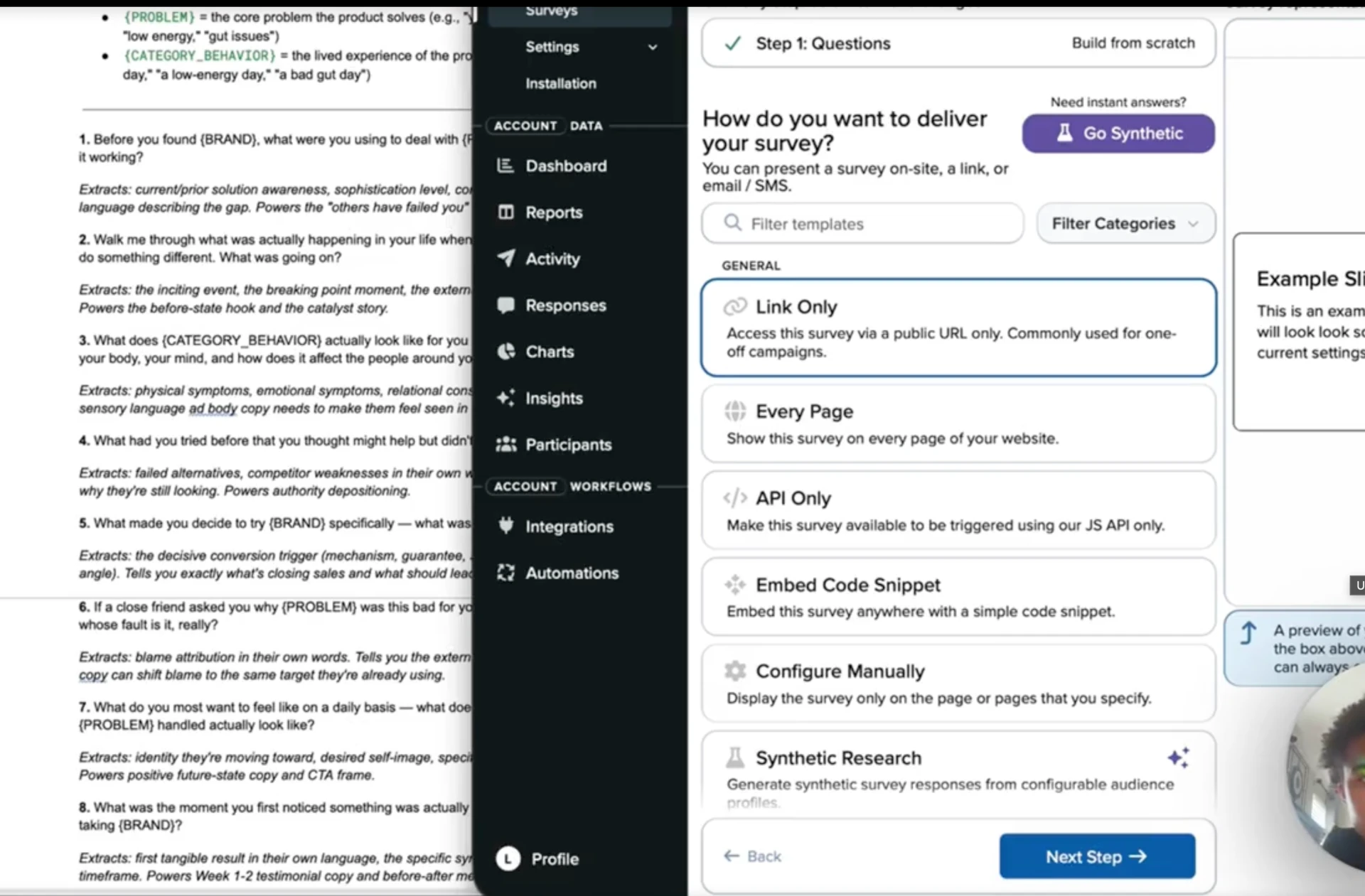
Slides 2-12 — the 11 long-answer questions. All "long answer" type. No multiple choice. No drop-downs. Paragraphs only.
The 11 questions (with extraction notes)
These are the exact questions I run. Each one is engineered to extract a specific layer of research that maps directly to ad inputs.
1. Before you found [BRAND], what were you using to deal with [PROBLEM] — and why wasn't it working?
Extracts: current/prior solution awareness, sophistication level, competitor failures, exact language describing the gap. Powers the "others have failed you" ad angle.
2. Walk me through what was actually happening in your life when you realized you needed to do something different. What was going on?
Extracts: the inciting event, the breaking point moment, the external circumstances they blame. Powers the before-state hook and the catalyst story.
3. What does [CATEGORY_BEHAVIOR] actually look like for you — what does it feel like in your body, your mind, and how does it affect the people around you?
Extracts: physical symptoms, emotional symptoms, relational consequences. Surfaces the sensory language ad body copy needs to make them feel seen in the first 3 seconds.
4. What had you tried before that you thought might help but didn't — and what was missing?
Extracts: failed alternatives, competitor weaknesses in their own words, sophistication level, why they're still looking. Powers authority depositioning.
5. What made you decide to try [BRAND] specifically — what was it that finally made you click?
Extracts: the decisive conversion trigger (mechanism, guarantee, specific review, dosing, angle). Tells you exactly what's closing sales and what should lead every ad.
6. If a close friend asked you why [PROBLEM] was this bad for you, what would you tell her — whose fault is it, really?
Extracts: blame attribution in their own words. Tells you the external force they're blaming so copy can shift blame to the same target they're already using.
7. What do you most want to feel like on a daily basis — what does a version of you with [PROBLEM] handled actually look like?
Extracts: identity they're moving toward, desired self-image, specific outcomes imagined. Powers positive future-state copy and CTA frame.
8. What was the moment you first noticed something was actually shifting after you started taking [BRAND]?
Extracts: first tangible result in their own language, the specific symptom that moved first, the timeframe. Powers Week 1-2 testimonial copy and before-after mechanism proof.
9. Is there anything about your life, what you've been going through, or what you've been feeling that you feel like most people don't understand or talk about?
Extracts: hidden, unvoiced pain — the thing they've never seen reflected back to them in an ad. The desire that cannot yet be put bluntly into words.
10. How would you describe [BRAND] to a friend who's never heard of it — what would you actually say to her?
Extracts: natural sales language, the exact words used unprompted, benefit hierarchy in their own mind. Powers UGC scripts, testimonial copy, and word-of-mouth ads.
11. What made you almost NOT try [BRAND]?
Extracts: objections, gaps in understanding / marketing.
How to use the answers — the clustering framework
Each completed response set becomes a distinct avatar brief. Don't average across all responses. Cluster.
Three clustering dimensions:
- Breaking point (Q2) — segments by inciting event
- Blame target (Q6) — segments by external enemy (work, hormones, partner, industry, biology, algorithm)
- Desired identity (Q7) — segments by identification role
Example: a wine-frame buyer who blames work stress and wants "calm without slow" is one avatar = one brief = one ad batch direction.
A wine-frame buyer who blames hormonal changes and wants "to feel like myself in my body again" is a different avatar = different brief = different ad batch.
Most operators run one ad campaign for all buyers and wonder why scaling stops. It stops because they're targeting an averaged-out non-person. The right move is to surface 3-5 distinct avatars from the survey and run separate concept tracks for each. Cross-reference Module 3 → Catalyst for how each avatar gets its own catalyst-style hook + advertorial track.
The workflow after launch
- Set up the survey in ZigPoll
- Wait 7-14 days as responses come in
- Export to CSV
- Drop the CSV into Claude inside your brand's project (cross-reference Module 3 → Native sub-page for project setup)
- Have Claude cluster by the three dimensions above
- Read the responses yourself — don't just trust Claude's summary. Sensory language, exact phrasing, the unexpected mention — Claude will smooth over the details that matter most
Brandon-rule: even if Claude pre-summarizes, read every individual response. The single most underrated source of breakthrough copy is reading the exact words a buyer used when they didn't know they were giving you a marketing brief.
The creatine angle lesson — research surfaces non-obvious differentiators
Quick example to drive this home.
When I first started using this survey on one of my brands, I thought the differentiator was identity marketing — branding, persona alignment, voice. Standard direct-response thinking.
What the responses actually showed: buyers were converting because we use the clinically-studied form of the active ingredient, while 80% of competitors use a cheaper related compound that doesn't show the same results in studies. (The classic creatine monohydrate vs other-form distinction. Most brands don't use the form Andrew Huberman talks about in the studies.)
I wasn't even leading with this in copy. It was buried somewhere on the product page. The research told me to lead with it.
Adjusted the advertorial → conversion rate shot up. Adjusted the ad copy → CPA improved. Adjusted the product page → AOV improved.
One survey question (Q5: "what made you click") surfaced a copy lever I'd been sitting on for months. That's the value of running this. You will find at least one of these per survey cycle if you actually read the responses.
The pricing / perceived value layer (Q11 in action)
Q11 ("what made you almost NOT try us") is where pricing objections show up.
Most operators run too cheap. They think low price = easy sale. Often the opposite is true: low price = perceived low value = skepticism.
Counter-example I've lived through: I ran an early version of RunItUp at $51 one-time. Decent course, real community, lifetime access, recorded calls. Real value inside. Pricing was the bottleneck.
Why: in a market where comparable courses sell for $1,500+, a $51 course reads as either (a) low quality, or (b) suspiciously cheap. Buyers' perceived value was capped at "$51 of value." The discrepancy between what they assumed and what was inside made the offer worse, not better.
The reframe via Q11: when buyers told me what almost stopped them, the answer surfaced as price-perception, not price-itself. They didn't think it cost too much. They thought it was worth too little.
The fix in DTC supplements (using Grunz, Live Momentous, etc. as the model):
- Clinical studies displayed prominently — data tells the buyer this works
- Certificates of authentication — third-party verification of ingredient quality
- Expert backing — doctors, formulators, named individuals with credentials
- Specific dosages — "12mg of [ingredient X] (the dose used in clinical studies)" not "powerful blend"
- Transparency — what's in it, why, at what dose, sourced where
Each of these justifies higher pricing AND increases conversion. Brandon's rule on pricing: don't lead with price. Lead with value. Make price a footnote, not a headline. Positioned right, raising the price often raises conversion rate.
I literally raised the price on a brand by 30% after reading the survey responses, added clinical study badges to the product page, addressed 3 specific objections from Q11 directly, and conversion rate went up.
The emotional valence layer
This is what Carlo originally introduced me to and it's underrated as a copywriting framework.
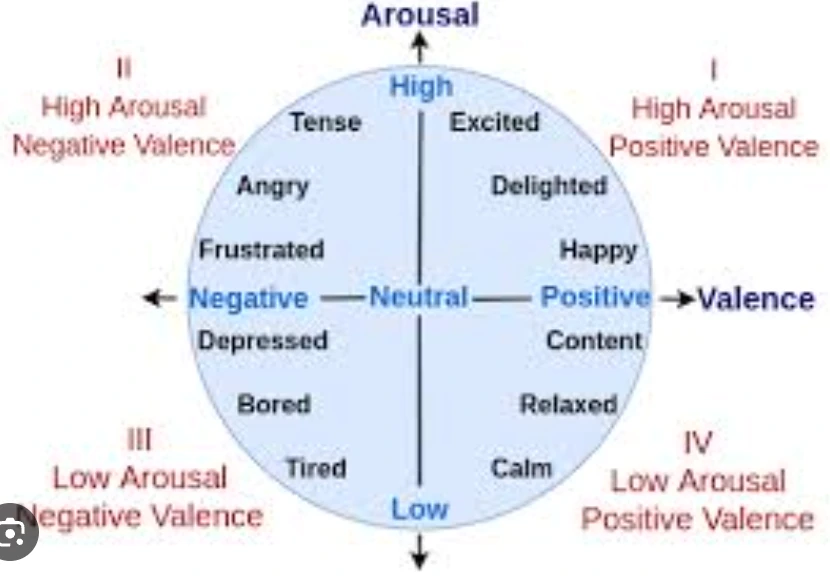
Emotions exist at different intensities. Not just "positive" or "negative" — but high-intensity vs low-intensity within each.
| Low intensity | High intensity |
|---|---|
| Bored | Furious |
| Annoyed | Disgusted |
| Disappointed | Devastated |
| Calm | Thrilled |
| Cozy | Joyful |
| Supportive | Reassuring |
| Fatigue | Exhaustion |
| Irritation | Anxiety |
Sadness ≠ devastation. Annoyance ≠ fury. They're the same valence (negative) at different intensities.
Why this matters in copy:
When a survey response describes a low-intensity emotion ("I'm just kind of tired all the time"), your copy can move them to a higher-intensity version of that same valence by future-pacing what happens if they don't address it. Future-pace it forward → tired becomes exhausted → exhausted becomes burnt out → burnt out becomes "I've lost myself."
The "guilt is a chest emotion" rule: physical body emotions hit harder than head emotions. Guilt sits in the chest. Anxiety sits in the stomach. Joy lives in the face. Use sensory specificity from Q3 in the survey to land emotion in the body, not in the abstract.
A buyer who said "I just feel tired" in Q3 might also say "I never sit down with my kids anymore" in Q3. The second one is the chest version of the first. Lead with the chest version in the ad.
The full emotional valence chart + the future-pacing prompts I run inside the masterclass.
Other research sources
The post-purchase survey is the master artifact. These are the supporting layers.
Type your avatar's main pain point into Reddit search. Read the top threads. Most operators stop after 2 posts. Read 20.
The pattern in Reddit research:
- Top-level posts = the loud version of the problem
- Comments = the actual lived experience
- Replies in comments = the unvoiced pain (Q9 in survey form)
Tooling note: Claude's native Reddit scraping is unreliable and surface-level. Use a real scraping tool (Brave MCP into Claude is what I run) or do it manually. Claude says it scraped Reddit when it really just hit one or two surface posts. Same thing for Amazon — Claude can't actually scrape Amazon despite what it claims.
When you want depth, scrape manually or with a proper tool, then dump the actual content into Claude for analysis.
Facebook groups
This is where mid-aged avatars live. Mom groups, health groups, recovery groups, niche-condition groups.
What you're looking for in Facebook groups:
- Memes (memes show what the audience actually finds painful or funny — uncensored emotional truth)
- Photos with motivational text (shows desired identity)
- Personal posts with vulnerability (shows hidden pain — Q9)
- Comment patterns under common posts (shows what people respond to)
Set up an alt Facebook profile if your real one doesn't fit the demographic. Join the groups. Scroll without engaging. Save what stands out.
Your own community
If you have a Discord, Telegram, Skool, or any owned audience — this is the highest-density research source you'll ever get. Cross-reference Module 4 → Mass Organic Distribution for the community-as-research framing.
When I built the Dialed brand, my entire avatar was inside my existing community. I didn't need surveys for the early product because I already knew them — they were the people I'd been posting for and talking to for months.
If you're early-stage and don't have a community yet: join other people's communities. The Dialed Discord, COMFRT's Discord, niche Reddit communities, Facebook groups — your avatar lives somewhere. Find where, listen.
AI voice agents (advanced)
One of my 1-on-1 clients does this: AI voice agents calling buyers post-purchase to do "satisfaction surveys" that are really structured therapy sessions.
Setup:
- AI voice agent (ElevenLabs Conversational AI / Bland AI / similar)
- Trained on a script that's effectively the 11 survey questions, but conversational
- 30-minute calls per buyer
- Full transcripts captured
- Transcripts mined for marketing insights
Why this beats text surveys: voice surfaces emotional intensity that text can't. People speak more vulnerably than they write. The pacing, hesitations, voice cracks — none of that shows up in a CSV export.
Cost: $1-3 per call typically. On a $50 AOV product with 10% survey conversion, you're spending ~$0.30 per buyer for research that improves every downstream marketing decision. Cheap.
Setup walkthrough is gatekept inside the masterclass.
Comments scraping
When an ad goes viral (or fails), don't delete the negative comments before mining them.
Comments tell you:
- What objections people are surfacing (Q11 in real-time)
- Whether the ad is being received as the angle you intended
- What kind of audience the ad is attracting (sometimes wrong audience = bad angle, not bad ad)
- What language is resonating (people quote ad lines they like back at you in comments)
Workflow: every winning ad gets its comments scraped. Every losing ad too. Drop into Claude. Ask: "What objections are surfacing? What audience is this attracting? What language is resonating?"
Specifically for catalysts and advertorials: if comments are calling it scam-y, trashy, or "another pitch," the introduction isn't doing enough to earn trust before the product appears. Cross-reference Module 3 → Catalyst and Module 3 → Advertorials for the pre-product setup that defuses this.
My Mind app
For the doom-scroll-to-research pipeline. My Mind is a free app (paid AI tier optional) where you save things from anywhere — screenshots, links, notes, Twitter posts, Instagram saves.
Workflow: when you're scrolling and something hits — a competitor's ad, a piece of UGC that resonates, a meme that captures your avatar, a Reddit post — save to My Mind. Tag with the brand.
Over time, you build a research library that's organized, searchable, and AI-queryable. Doom-scrolling becomes input, not waste.
The Brandon-rule on research
AI is good for outlines. Deep research, you do yourself.
Anyone can prompt Claude to spit out ads. The outliers are the ones who do the deep trenching work — read the survey responses, scrape the Reddit threads, lurk in the Facebook groups, scroll through their own DMs, listen to the AI voice agent transcripts, mine the comments on their own ads.
This is what differentiates an operator who hits on accident from an operator who hits on purpose. The actual leverage isn't in the prompts — it's in the input quality going into the prompts.
If everyone has access to Claude and you all use roughly similar prompts, the only variable left is the quality of the research you bring to it. That's the moat.
What's gatekept inside the masterclass
The principles are here. The artifacts live in the masterclass:
- The full ZigPoll setup walkthrough with screenshots — survey naming, question copy, slide architecture, $100 incentive copy
- The clustering prompts — what to feed Claude after CSV export to surface 3-5 distinct avatars per cycle
- The emotional valence chart in full + the future-pacing prompts that move avatars between intensity levels
- The AI voice agent setup — script structure, tooling, transcript-to-marketing pipeline
- Live research breakdowns — the actual surveys I'm running across my brands, what's surfacing, how it changed campaigns
- The avatar brief template — exact format I use to convert clustered survey data into ad batch direction
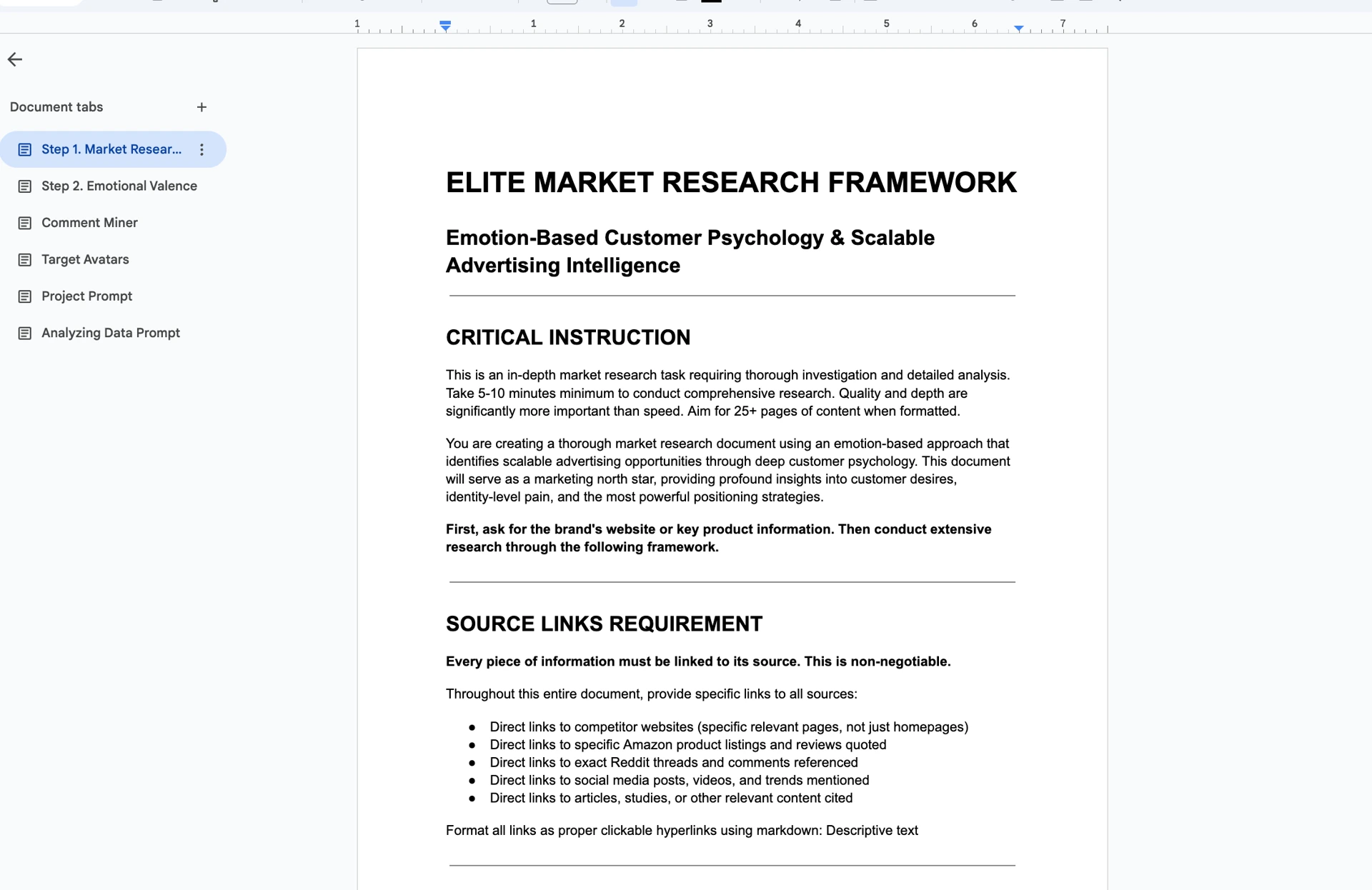
Want the full ZigPoll setup, the clustering prompts, the AI voice agent walkthrough, and the live research breakdowns I update biweekly? All inside the RunItUp Masterclass → Join here
Join now to lock in your rate, prices are increasing quickly.